Top Dell PowerEdge Server Models in 2026
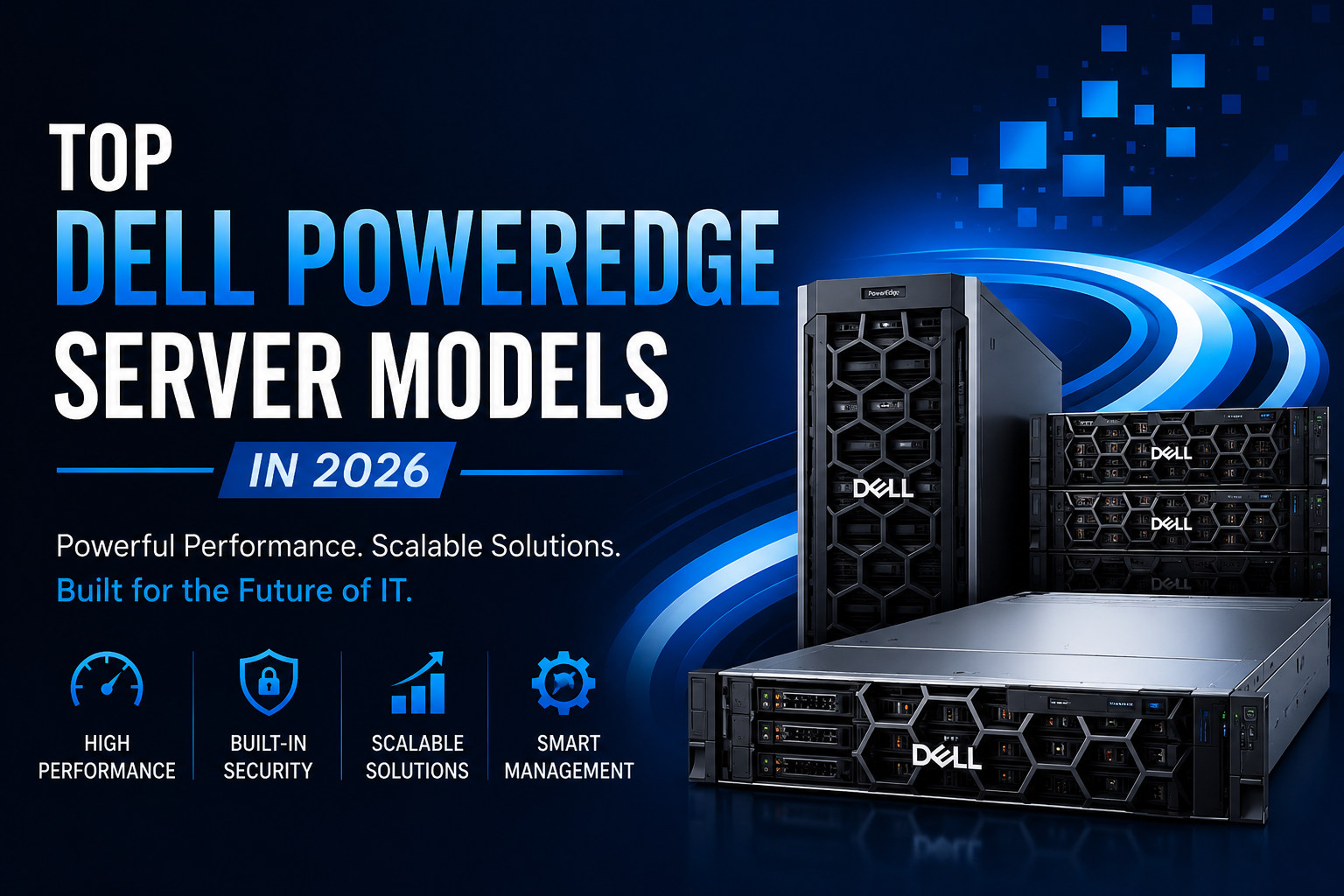
Discover the top Dell PowerEdge server models in 2026 and learn how they support modern business workloads, virtualization, AI applications, and data center efficiency. This guide explores the best PowerEdge servers to help organizations choose a reliable, scalable, and high-performance infrastructure solution.
As businesses continue to embrace cloud computing, virtualization, AI-driven applications, and data-intensive workloads, the demand for reliable server infrastructure has never been higher. Dell PowerEdge Servers remain a preferred choice for organizations seeking performance, scalability, and long-term value.
In 2026, Dell's PowerEdge Server portfolio offers solutions for businesses of every size—from growing startups to enterprise data centers. Understanding the strengths of each model can help IT teams make smarter infrastructure investments and prepare for future growth.
Why Dell PowerEdge Servers Continue to Lead
Dell PowerEdge servers have built a strong reputation by combining advanced processing power, intelligent automation, and flexible deployment options. Modern organizations choose PowerEdge servers because they offer:
- High-performance computing capabilities
- Enhanced security architecture
- Efficient remote management
- Scalable storage configurations
- Support for virtualization and hybrid cloud environments
- Energy-efficient operation
These features make PowerEdge servers suitable for everything from business applications and databases to AI workloads and edge computing.
Top Dell PowerEdge Server Models in 2026
Dell PowerEdge R760
The Dell PowerEdge R760 stands out as one of the most versatile rack servers available in 2026. Designed for demanding enterprise workloads, it delivers exceptional performance for virtualization, analytics, and database management.
Key Highlights:
- Supports the latest Intel Xeon processors
- High memory capacity for resource-intensive applications
- Flexible storage configurations
- Ideal for virtualized environments and large-scale business operations
Organizations looking for a balanced combination of performance and scalability often consider the R760 a reliable long-term investment.
Dell PowerEdge R660
For businesses that need enterprise-class performance within a compact footprint, the PowerEdge R660 is a strong contender.
Key Highlights:
- Optimized 1U rack design
- Excellent processing efficiency
- Suitable for cloud-native applications
- Supports high-speed networking options
The R660 is particularly effective for organizations managing space-constrained data centers without compromising computing power.
Dell PowerEdge T560
Not every business operates from a dedicated data center. The PowerEdge T560 tower server is designed for organizations that require powerful computing resources in office environments.
Key Highlights:
- Quiet tower design
- Expandable storage options
- Simplified deployment and management
- Ideal for branch offices and small businesses
Companies upgrading from traditional desktop-based systems often find the T560 a practical solution for centralized business operations.
Dell PowerEdge R760xs
The R760xs offers a balanced approach for organizations seeking enterprise performance while maintaining budget efficiency.
Key Highlights:
- Optimized for virtualization
- Flexible workload support
- Cost-effective configuration options
- Efficient power consumption
This model is well-suited for businesses planning infrastructure expansion without overinvesting in unnecessary resources.
Dell PowerEdge XE9680
AI and machine learning continue to reshape industries in 2026. The PowerEdge XE9680 is engineered specifically for advanced computing workloads.
Key Highlights:
- GPU-optimized architecture
- Accelerated AI model training
- High-performance computing support
- Enterprise-grade reliability
Organizations involved in artificial intelligence, scientific research, and advanced analytics benefit significantly from the capabilities of the XE9680.
How to Select the Right Dell PowerEdge Server
Choosing the right server depends on business goals, workload requirements, and future scalability needs.
Consider the following factors:
Workload Type
Identify whether the server will handle databases, virtualization, file sharing, AI processing, or web hosting.
Scalability Requirements
Select a model that can accommodate future growth in storage, memory, and processing power.
Physical Deployment
Rack servers are ideal for data centers, while tower servers are often better suited for office environments.
Budget Considerations
Evaluate both initial acquisition costs and long-term operational expenses, including maintenance and energy consumption.
Future Trends Driving Server Investments
Several technology trends are influencing server purchasing decisions in 2026:
- Increased adoption of hybrid cloud environments
- Growing demand for AI infrastructure
- Expansion of edge computing deployments
- Greater focus on cybersecurity
- Higher requirements for energy-efficient IT operations
Dell PowerEdge servers continue to evolve alongside these trends, helping organizations maintain competitive and resilient IT environments.
Conclusion
The Dell PowerEdge lineup in 2026 offers powerful options for businesses of all sizes. Whether an organization needs a compact server for virtualization, a tower server for office deployment, or a high-performance platform for AI workloads, Dell provides solutions tailored to modern computing demands.
By carefully evaluating workload requirements, scalability goals, and infrastructure strategies, businesses can choose a PowerEdge server that supports both current operations and future growth.